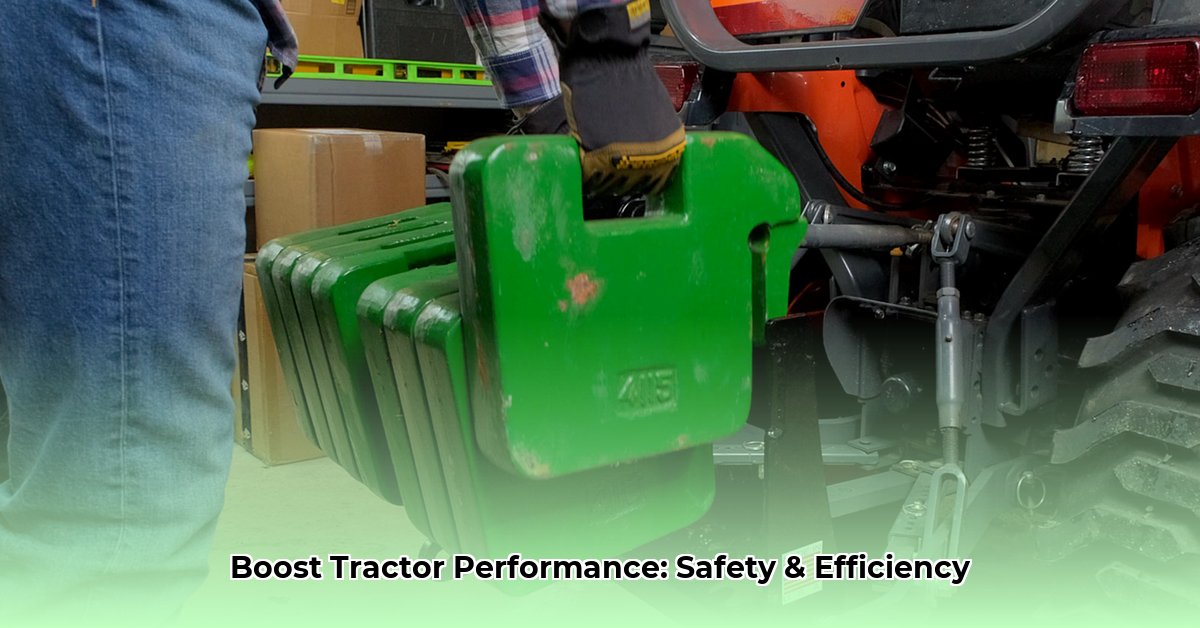
Understanding Tractor Counterweights: More Than Just Added Weight
Counterweights are essential for safe and efficient tractor operation. They significantly improve stability, preventing potentially dangerous rollovers, especially when using heavy implements or working on uneven terrain. Think of them as crucial safety and performance enhancers, boosting your tractor's capabilities and ensuring your well-being. This guide details how to select, install, and maintain these vital components. For more information on tractor weights, check out this helpful resource: Tractor Weight Guide.
Types of Tractor Counterweights
Several types of counterweights cater to diverse needs and preferences. The best choice depends on your specific applications and operational conditions.
Cast Iron Counterweights: Durable and reliable, offering consistent weight distribution. These are a popular choice for their longevity and resilience.
Liquid Ballast Counterweights: These offer adjustable weight, allowing for flexible adjustments based on the load and terrain. Fill them with water or approved fluids to fine-tune your tractor's stability.
Other Materials: While less common, some manufacturers offer counterweights made from concrete or specialized alloys. However, cast iron and liquid ballast remain the industry standards.
Choosing the right type is crucial. Cast iron provides consistent, dependable weight, while liquid ballast offers adjustable weight distribution, ideal for fluctuating conditions.
Selecting the Perfect Counterweight: A Tailored Approach
Determining the correct counterweight is crucial for both safety and efficiency. Don't guess; consult your tractor's owner's manual. It provides manufacturer-recommended weight ranges for your specific model. Ignoring these recommendations can compromise stability and safety. The weight you need depends on several crucial factors:
Heavier Loads: More substantial counterweights are needed for larger implements and heavier materials to maintain balance and prevent tipping.
Uneven Terrain: Hilly or sloped land requires extra weight for added stability and control, preventing rollovers.
Implement Type: Front-mounted weights are ideal for front-end loaders, while rear weights enhance the stability of three-point hitch implements. Proper weight placement is crucial.
Some experts suggest slightly exceeding the minimum recommended weight, particularly in challenging conditions, for an added margin of safety. However, always stay within the manufacturer's specified maximum weight limitations.
Installing Counterweights: A Step-by-Step Guide to Safe Installation
Installing counterweights usually involves straightforward steps, but safety must be the top priority. Always follow these guidelines:
Step 1: Preparation
- Consult your tractor's owner's manual for model-specific instructions and diagrams.
- Inspect the counterweight for damage; damaged components are unsafe.
- Clean the counterweight and mounting points on the tractor for a secure fit.
Step 2: Secure Attachment
- Carefully position the counterweight on designated mounting points.
- Use the correct fasteners specified in your owner's manual.
- Tighten fasteners securely but avoid over-tightening, which could cause damage.
Step 3: Verification
- Double-check the counterweight's secure attachment and alignment.
- Gently rock the tractor to confirm stability. Seek professional help if unsure.
Remember: Lifting heavy objects alone is dangerous. Get assistance if needed.
Maintaining and Storing Your Counterweights: Extending Their Lifespan
Routine maintenance ensures your counterweights' longevity and safety.
Regular Inspection: After each use, check for cracks, corrosion, or damage. Even small cracks compromise structural integrity.
Cleaning: Regularly clean off dirt and debris to prevent corrosion.
Lubrication: Lubricate moving parts to minimize wear and ensure smooth operation.
Storage: Store counterweights in a dry, protected location, preferably off the ground, to prevent rust and deterioration.
Consistent maintenance extends the lifespan of your counterweights and helps ensure safe operation.
Cost Considerations and Lifecycle Analysis: Weighing the Factors
Counterweight costs vary based on material, weight, and manufacturer. Compare prices and features to find the best value. Consider warranty coverage, as this significantly impacts long-term costs. A seemingly minor initial cost saving can become significant over time with repairs.
While sustainable materials are gaining traction, research continues into more cost-effective and environmentally friendly options. Consider not only cost and durability but also the environmental impact of the manufacturing process when making your purchase.
Counterweights: The Bottom Line
Investing in the right counterweights enhances tractor safety and efficiency. They aren't a mere accessory, but a vital component of safe and effective farming. Always refer to your owner's manual. When in doubt, consult a qualified professional. Safety remains paramount.
Key Takeaways:
- Proper counterweight selection is crucial for safe and efficient tractor operation, particularly with front-end loaders.
- Several counterweight types are available, each with specific benefits. Choose the type best suited to your workload and terrain.
- Always consult your tractor's manual for weight recommendations and installation instructions. Safety is paramount.